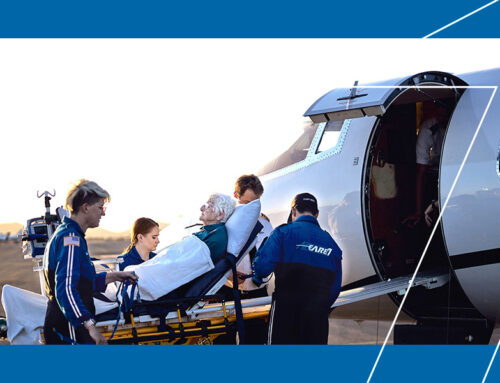


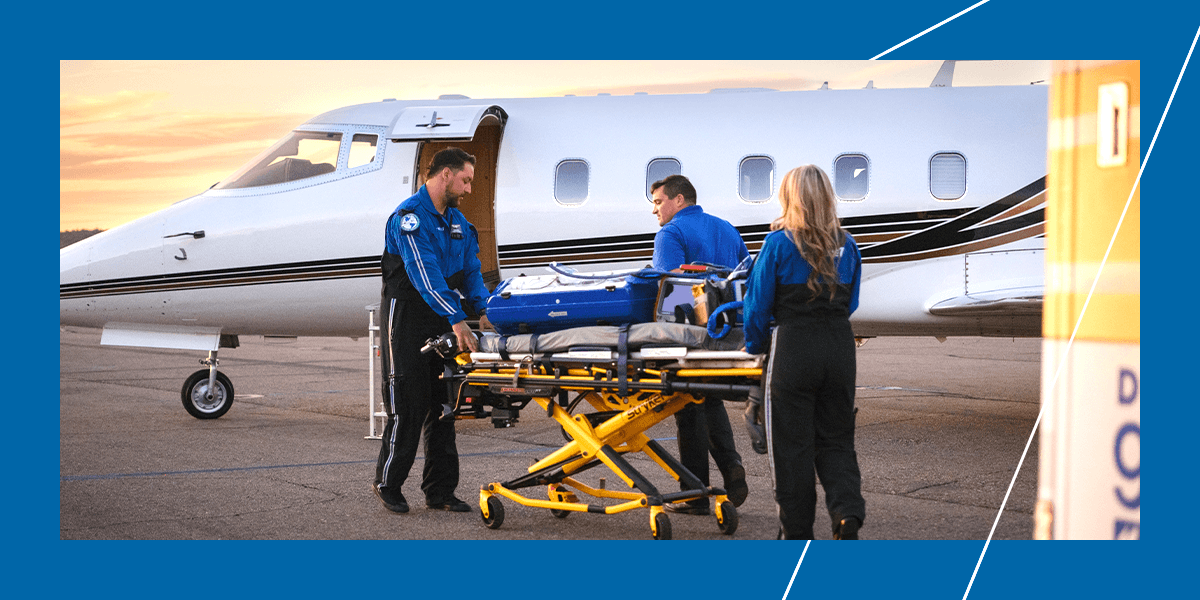
Traveling abroad is an incredible opportunity, though specialized medical care isn’t always available when you need it. A faster medical response time significantly improves recovery outcomes for patients. When traveling abroad, access to reliable medical transportation can make all the difference.
Also known as flying ICUs, air ambulances are a safe mode of transport for international medical care. This guide offers useful information about air ambulances, with tips about documentation, insurance and medical repatriation. Learn essential steps in a medical crisis when traveling outside the country.
When Americans Need an International Air Ambulance
With potential language barriers and limited medical access, Americans may find it difficult to receive the care they need away from home. If you or your loved one experiences a heart attack, stroke, accident or illness, it’s essential to have a plan.
The following scenarios may call for international air transport:
- When ground transport is too risky, slow or impractical due to terrain or distance
- When medical care in another country is overly expensive, insufficient or experimental
- When a patient requires care for internal bleeding, cardiac arrest, birth complications or respiratory failure
- When a patient needs an organ transplant or other specialized treatment at a distant medical facility
International Medical Repatriation Process
Imagine you are hiking in Central America when you slip on a rock and fall, resulting in a serious injury. At the local hospital, you discover you’ll need surgery that can only be performed in the United States.
After an accident or injury, you or your loved one may need to fly internationally for continued treatment. While an evacuation is meant for rapid lifesaving care, repatriation is suited for ongoing treatment close to home. This bed-to-bed transfer is ideal for family support and long-term recovery. The repatriation process often looks like:
- Assessment and clearance: A local physician will evaluate whether you are fit to fly.
- Receiving facility: Your medical team will coordinate with a provider in the U.S. to ensure the receiving medical facility is prepared to admit you upon arrival.
- Flight planning: You or your insurance provider may arrange a mode of air transport that suits your condition.
- On-flight care: During the flight, medical professionals may administer treatment and monitor your condition.
- Patient handover: After landing, your medical team will transfer you to the receiving facility for continued care.
Medical repatriation involves careful planning. First, all medical supplies must be declared and cleared by customs regulations. To fly home, you will need travel documents, medical reports and medication lists. Depending on the case, you may need to coordinate your exit with an embassy or consulate. Keep in mind that some insurance policies offer medical repatriation benefits.
International Air Ambulance Documentation
Proper documentation is essential to a smooth air medical transport. Document preparation helps prevent delays, support medical safety, minimize stress and protect patients from risks during the flight. A U.S. air ambulance may require the following documentation:
- Medical documents: Physician approval letter, medical reports and medication lists.
- Identification documents: Passport scan, visa scan and patient or family member consent.
- Legal documents: Medical power of attorney signature and embassy registration.
- Payment documents: Quote acceptance and proof of payment.
- Insurance documents: Policy ID card and proof of coverage.
International Air Ambulance Costs and Insurance
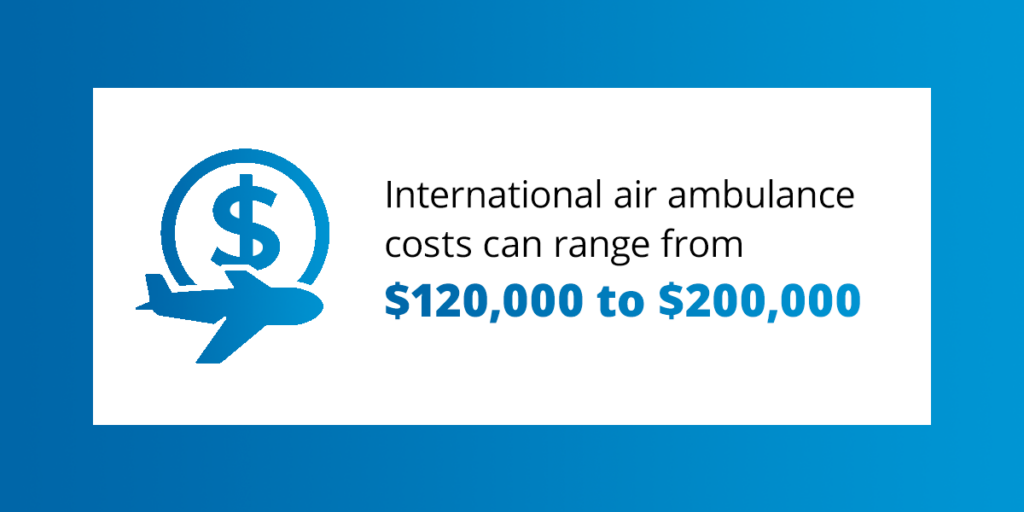
International air ambulance costs can range from $18,000 to $55,000, depending on factors like distance, aircraft type, medical staff expertise, level of care, international regulations, insurance limitations and fees for ground transport or overnight staff accommodation.
Travel insurance can protect your health and finances. The main types of insurance to consider include:
1. Travel Health Insurance
Because Medicaid and Medicare do not cover treatment outside the United States, it’s important to consider insurance policies that help pay for medical care outside the country. This type of insurance is important if you are doing high-risk activities, have a health condition or are traveling for over six months.
2. Medical Evacuation Insurance
This type of insurance is recommended if you are traveling somewhere with limited medical care. Evacuation insurance covers transport to a hospital from a remote area, where out-of-pocket costs could range upward of $100,000.
3. Trip Cancellation or Travel Disruption Insurance
This type of insurance helps you get your money back in case you need to cancel your trip. This insurance generally covers financial investments like plane tickets, cruises or train passes. However, it typically does not cover medical expenses outside of the United States.
How to Choose an International Air Ambulance Provider
Choosing the right air ambulance provider is crucial for a safe, smooth transfer. Evaluate your provider using the following criteria:
- Safety records and accreditations
- Medical personnel qualifications
- International flight planning experience
- Bed-to-bed services that cover the entire transfer
- Transparent, all-inclusive quotes without hidden fees
- Aircraft capabilities for long distances and specific medical needs
International Travel Medical Care Preparation
Pretravel planning can help ensure a straightforward medical transfer. Consider the following steps as you prepare for your trip:
- Locate the nearest United States Embassy
- Check travel destination for warnings and health precautions
- Research which medical services your insurance policy covers outside the United States
- Look into local medical laws, vaccine requirements and medicine restrictions in your destination country
- Create a travel document with emergency contacts, medical history and insurance information
- Pack medications and prescriptions in your carry-on luggage for easy access
Steps for International Medical Response
If your loved one requires international medical care, there are several things you can do. First, keep emergency contacts on hand, including the numbers of international aid organizations, the United States Embassy and loved ones back home. Message family and friends on social media if data plans don’t permit texts or calls.
Contact your local embassy or consulate for lists of nearby doctors and hospitals. They can also help you get in touch with your loved ones back home if necessary.
- An air transport decision timeline might look something like:
- Assessing local care and contacting nearby medical services.
- Determining if nearby facilities offer sufficient medical care, or coordinating a transfer with your insurance provider.
- Monitoring the person’s flight stability for repatriation, depending on a physician’s assessment.
- Deciding to use an air ambulance if the situation calls for treatment only available in the United States.
Receive Medical Care Safely With AirCARE1
Air medical transport can help bring patients to the care they need. Considering an international air ambulance for dependable medical transportation?
AirCARE1 is a trusted provider for long-distance medical transport. Whether you need bed-to-bed care or private medical transport, we are here to help. Our services include air ambulances, commercial medical escorts, nonemergency medical flights and specialty transports. Over the years, our team has transferred thousands of patients in international locations, including South America and Europe, for safe, reliable medical care.
Ready to learn more? Explore our services and contact us today for an all-inclusive quote!