
It can feel overwhelming to coordinate a private air ambulance for a loved one, especially if it’s your first time doing so. It’s a situation that few anticipate, and the demands of finding the right private air ambulance provider and navigating the required logistics can add stress to an already nerve-wracking situation. In such vulnerable moments, it helps to have a clear direction and a step-by-step guide walking you through the process.
To provide you with the support you need, AirCARE1 has compiled this detailed guide to coordinating a private air ambulance for a loved one. Explore the vital steps involved in the process, the key questions to ask a private air ambulance provider and other essential details.
What Is an Air Ambulance and When Is It Necessary?
A private air ambulance is a method for transporting individuals with critical health conditions who require medical assistance during transit. These dedicated aircraft are equipped to serve as airborne intensive care units operated by highly skilled professionals, including nurses, paramedics and physicians in some cases. These professionals provide necessary medical care and treatment to patients during transport.
There are specific, critical instances where a private air ambulance is the optimal and often lifesaving choice for patient transportation. Some of them include:
- Medical emergencies: For time-critical medical emergencies where every second counts, such as a stroke or cardiac arrest, a private air ambulance facilitates swift transport to medical facilities. In such instances, patients need urgent medical assistance during transportation to increase their chances of survival and recovery.
- Serious injuries: Patients who have sustained serious injuries, from multisystem trauma to dangerous falls, can benefit from continuous in-flight care aboard a private air ambulance.
- Long-distance medical relocation: When a patient requires transfer to a medical facility far from their current location, a private air ambulance ensures they continue to receive medical care and assistance en route.
What Are the Benefits of Using a Private Air Ambulance?
Private air ambulance services offer several benefits that significantly impact patients’ experience. These benefits are more than conveniences — they affect patient outcomes, comfort and peace of mind during vulnerable situations.
Comfort
A private air ambulance offers you and your family privacy and comfort during vulnerable times. With a private air ambulance, you can rest assured that your loved one will be surrounded only by a specialized team attending to their medical needs — family members are also welcome and encouraged to join the flight and offer much-needed comfort and reassurance.
Continuity of Care
The services aboard a private air ambulance can be customized to suit specific medical needs. For instance, if a loved one requires specialized cardiac monitoring or a particular cabin temperature, the air ambulance team can tailor their assistance and the aircraft to meet those needs. Additionally, you can book flight times that accommodate the schedules of everyone involved, including the patient and receiving facilities, ensuring continuity of care.
Rapid Response and Flight Time
Private-pay air ambulances offer rapid response and swift deployment, which can make all the difference in life-or-death situations. They also provide direct, uninterrupted transportation to receiving hospitals. This significantly reduces the risk of delays and gives patients more peace of mind.
Vital Steps for Coordinating a Private Air Ambulance
If your loved one requires a private air ambulance for any reason, follow these steps to ensure smooth coordination and communication.
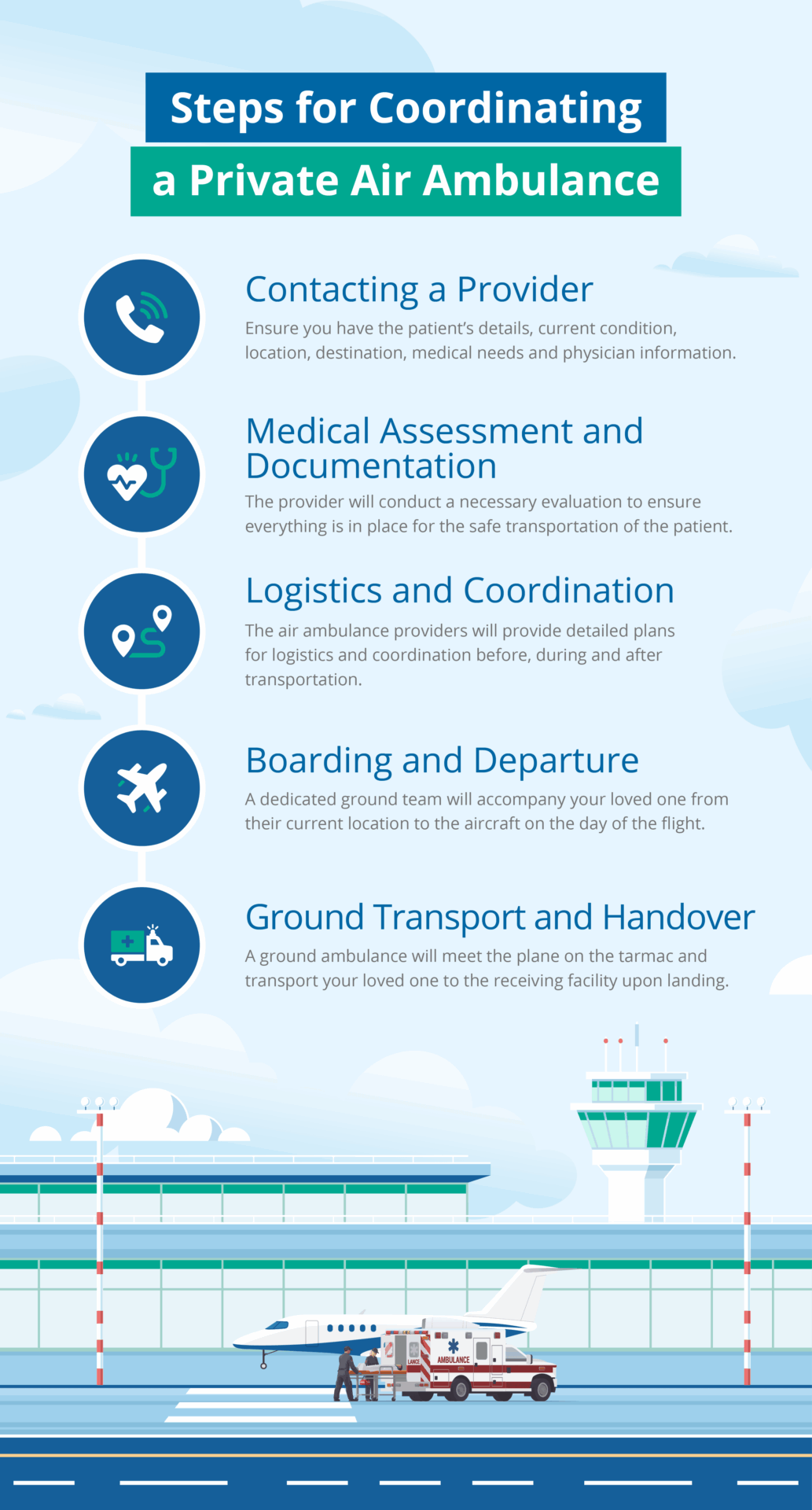
Contacting a Provider
The first step you should take when a medical situation arises is to contact a private air ambulance provider. When calling a provider, have the following details on hand:
- Patient details: This information includes your loved one’s full name, age, gender, date of birth and next of kin.
- Patient’s current condition: You’ll need to provide a detailed report on their current medical condition. Doing so helps the air ambulance provider assess the risk and determine the kind of medical support and assistance they will need during the flight.
- Location and destination details: To assist the provider with transportation logistics, you’ll need to provide the pickup location and the receiving destination.
- Medical needs: During the flight, your loved one may need specific medical support, such as ventilators, mobility support or supplemental oxygen. Consequently, it’s essential to highlight specific medical needs that’ll require special attention.
- Physician information: In some cases, you may need to provide an air ambulance provider with the details of your loved one’s physician. This information will be necessary if the provider needs to obtain their full medical history.
Medical Assessment and Documentation
In this next step, the provider will conduct a necessary medical evaluation to ensure everything is in place for the patient’s safe transportation. During this assessment, a team of medical specialists will review the information you have provided to determine if your loved one is fit to fly and the level of care they will require in-flight. The goal is to ensure they receive the best care during transit.
During this phase, the air ambulance provider will outline essential details, including the specialized equipment required for the flight and the type of in-flight medical support they will provide.
Logistics and Coordination
At this stage, the air ambulance providers will provide detailed plans for logistics and coordination before, during and after transportation. Some essential details they will cover include:
- Hospital liaison: Depending on your loved one’s current location and proposed destination, the provider may need to liaise with medical teams on both ends and with good reason. For instance, it may be necessary to confirm the availability or otherwise of beds at the destination hospital.
- Ground transportation: This logistical detail covers the ground transportation of your loved one to and from the aircraft at both ends of the flight. Coordinating ground transportation in advance is necessary to ensure a smooth and seamless bedside-to-bedside transport, which is essential for patient safety and continuity of care.
- Documentation and clearances: The provider will complete relevant documentation, flight clearances and security checks to prevent delays before and after the flight.
- Aircraft and crew assignment: Based on your loved one’s medical needs, the provider will select and coordinate a dedicated flight crew comprising health professionals specialized in handling their condition.
Boarding and Departure
With all the necessary logistic plans and documentation in place, a dedicated ground team will accompany your loved one from their current location to the aircraft on the day of the flight. Once aboard the aircraft, the designated medical flight crew will provide your loved one with the necessary care and support, monitoring vital signs and other relevant parameters to ensure their well-being.
Ground Transport and Handover
When the flight touches down at the destination, there will be a ground ambulance waiting on the tarmac to receive and transport your loved one to the receiving hospital or other facility. Before the transfer, the air ambulance provider will conduct a medical handover to ensure a seamless transition for continued care.
How to Prepare a Loved One for Air Ambulance Transport
Your role in coordinating a private air ambulance for your loved one extends beyond contacting a provider and providing them with the essential details. You also need to prepare them for transport as much as you can. The following are additional measures you can take to ensure their comfort and safety during transit:
- Pack essentials and personal belongings: When preparing for long-range air ambulance transportation, you should pack the essentials your loved one will need to be comfortable throughout the flight. These essentials include blankets, pillows and other personal care items. If the person you’re transporting is a child, consider packing comfort toys to help them feel at ease.
- Organize medications: Remember to carry your loved one’s medication in its original, labeled packaging.
- Provide emotional and physical support: Since your loved one may be anxious during the flight, it’s essential to guide them through the process and offer reassurance to help ease their concerns.
What to Consider When Choosing an Air Ambulance Company
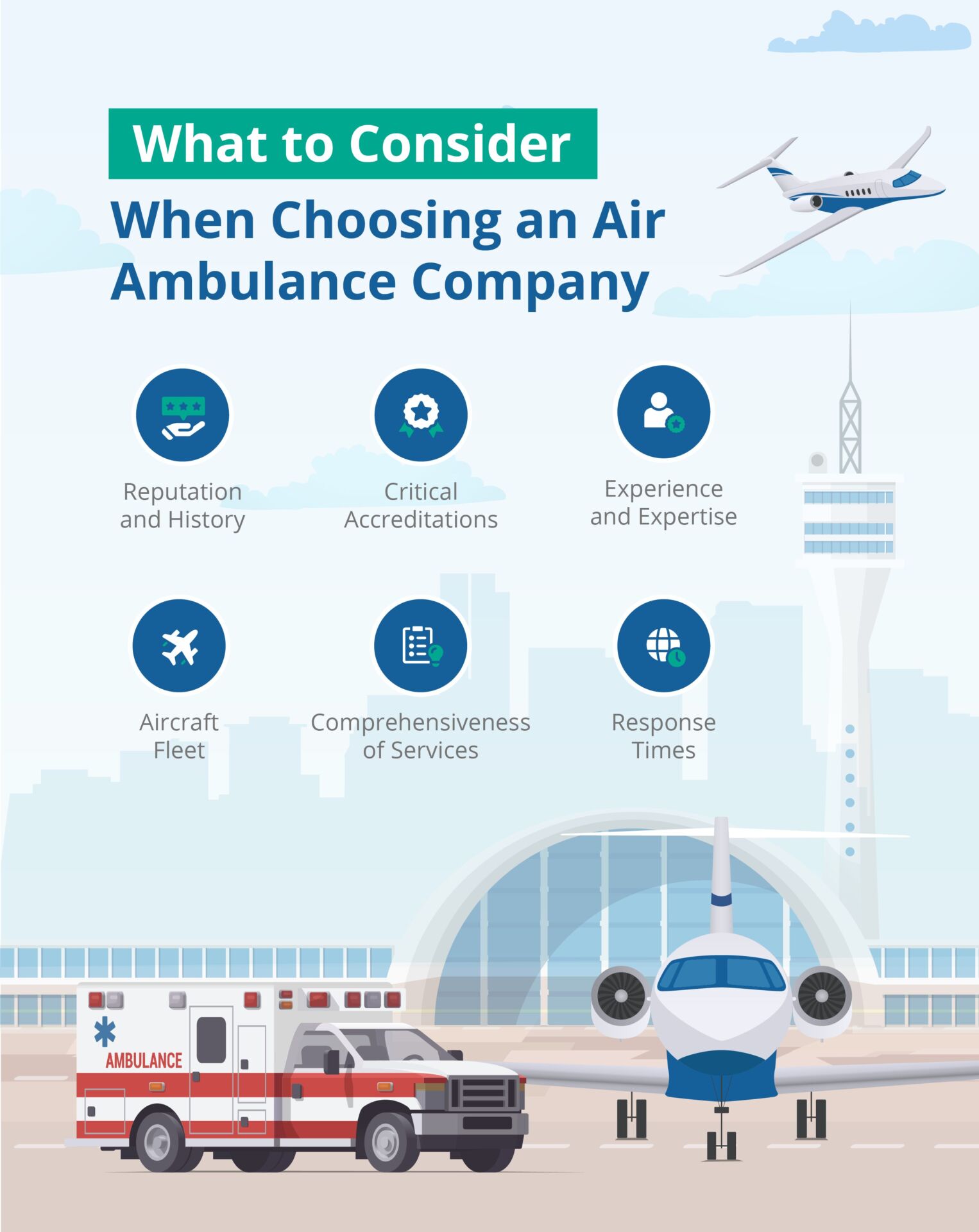
The air ambulance provider you choose determines the quality of care your loved one receives during transportation, as well as the quality of service you experience throughout the process. Before contacting a private air ambulance provider, consider the following factors.
Reputation and History
Air ambulance services are sensitive and require a great deal of care. For this reason, you should research the reputation and history of any provider you’re considering — look into details such as their adherence to schedules, safety records and flight success rates. Review previous customer feedback to gauge the quality of their services.
Critical Accreditations
Accreditation should be a critical consideration when choosing an air ambulance provider. By choosing an accredited provider, you can rely on the assurance that a reputable third party has verified their commitment to the safety and well-being of your loved one. Look for providers accredited by accrediting bodies such as the Commission on Accreditation of Medical Transport Systems (CAMTS) and the National Accreditation Alliance for Medical Transport Applications (NAAMTA).
Experience and Expertise
To ensure you and your loved one have a positive experience throughout the process, from initial contact to handover, choose providers with the experience and expertise to deliver outstanding service. Consider factors such as their length of service and the number of patients they have successfully transported in that time. Pay attention to vital details that showcase their expertise and years of experience, including wing-to-wing transfer experience and their comprehensive medical protocols for diverse patient needs.
Some air ambulance providers are more specialized in handling certain medical cases than others. If you’re transporting a loved one who requires specialized care and expertise, you’ll be better off choosing a partner that understands the requisite medical needs.
Comprehensiveness of Services
During time-sensitive situations, you’ll likely be too vulnerable to handle certain aspects of coordination without help. In times like these, it’s helpful to have an air ambulance company that offers comprehensive services to attend to essential details.
Before choosing a provider, review the services they offer. The best air ambulance companies provide services that cover every step of the process, including seamless logistics and coordination, bedside-to-bedside transport, high-quality patient care in-flight and reliable handovers.
Aircraft Fleet
Aircraft fleet is crucial to the operational range, medical capabilities and accessibility of air ambulance companies. The most suitable aircraft are customized with advanced medical equipment and life support systems to deliver ICU-level care in-flight. Renowned for its speed and reliability, the Learjet 60 is an excellent example of an effective air ambulance platform. Be sure the provider you choose uses aircraft that meet the highest standards for safety, technology and reliability.
Response Times
How quickly your loved one receives care can significantly influence their chances of survival and healing. While slow responses from air ambulance partners can lead to long-term, non-recoverable damage, speedy responses can facilitate prompt medical care and increase the chances of recovery.
Questions You Should Ask Before Booking a Private Air Ambulance
Since choosing the right air ambulance company is crucial to getting your loved ones the help they need, you should take the time to understand what each company offers before making a decision. Asking the following questions will provide you with insights into key details that should inform your decision-making.
What Are the Qualifications of the Medical Team?
The medical team providing critical care and support to your loved one during transit is paramount and forms a crucial component of a provider’s services. It’s not out of place to verify the qualification and expertise of every professional on board, including flight nurses, paramedics and physicians.
Feel free to ask comprehensive questions about their specialized training, certifications and licensing status. This inquiry ensures a high standard of care and gives you peace of mind knowing your loved one is in safe and capable hands.
Does the Provider Have the Proper Licenses and Accreditation?
As discussed above, accreditation offers an extra layer of trust and confidence in an air ambulance provider’s capabilities. If accreditation is not openly displayed on platforms such as company websites and social media, you can ask about it during initial calls and consultations.
What Happens in Cases of Delays or Weather Issues?
No matter how well-calculated an air ambulance operation is, things may not always go as planned. Due to factors beyond human control, such as weather, transportation may be delayed. It’s crucial to know how an air ambulance provider handles such delays and if they have contingency plans in place to ensure continued care.
Are Family Members Allowed to Travel Alongside Patients?
Not every air ambulance company allows family members to accompany their loved ones on flights. Factors such as aircraft space can limit the number of people who can board a flight. If flying with your family in critical moments is nonnegotiable for you, you should ask this question before proceeding with booking.
Are There Any Hidden Costs?
Some air ambulance companies offer their services at what appears to be low-cost pricing — however, further down the line, some hidden costs may emerge. To avoid this scenario from occurring in your business relationship, ask questions about the different costs involved in hiring private-pay air ambulances from each company you’re considering.
Coordinate Your Loved One’s Private Air Ambulance With Confidence
If a loved one needs in-flight medical care during transit for any reason, you should do everything in your power to ensure they receive outstanding care with a private air ambulance. The first step in the process is to find a reputable air ambulance company that meets all the requirements. The right service provider will make the rest of the coordination a smooth sail.